 Nous sommes votre équipe canadienne de l’Atlantique


 1-877-445-3527
 Stockez plusieurs adresses
Identify the Type and Location
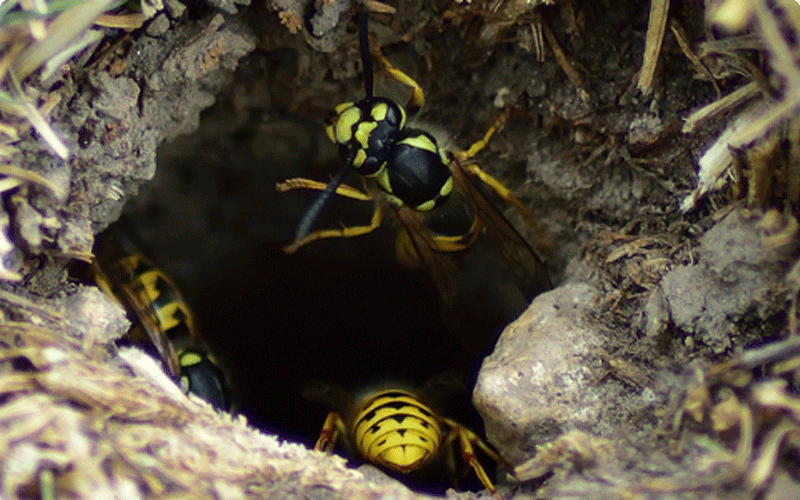
Before taking any action, it's important to identify where the nest is located and what type of wasps you're dealing with. Nests can commonly be found:
- Under eaves or rooflines
- In trees or shrubs
- Inside wall cavities or attics
- Underground
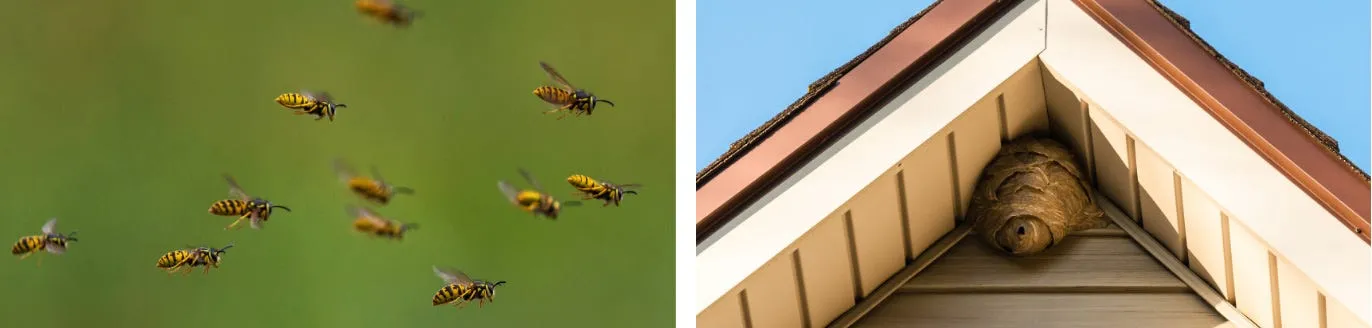
Some species are more aggressive than others, especially when their nest is disturbed. Common species include:
- Paper wasps: Open, umbrella-shaped nests often found under eaves
- Yellowjackets: Enclosed nests, commonly in the ground or wall cavities
- Hornets: Large, enclosed nests usually hanging from trees or structures
Ground and large aerial nests are typically the most dangerous to handle on your own.
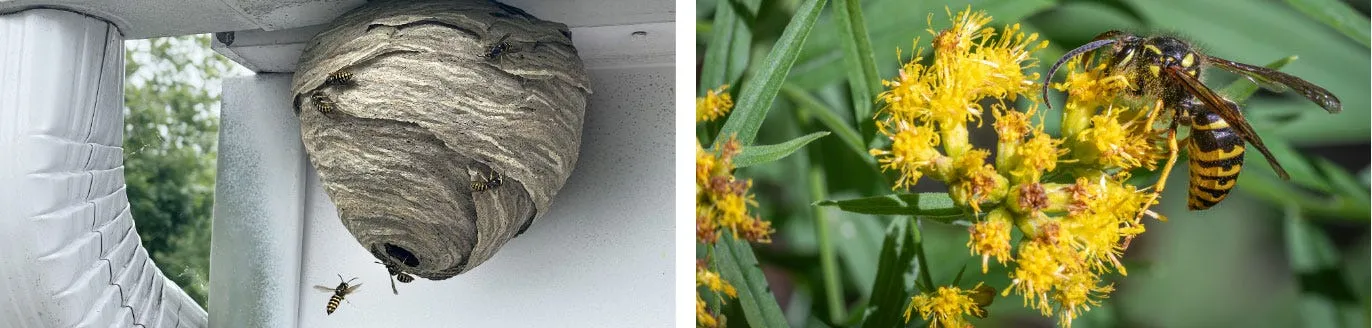
Prioritize Safety First
Wasp stings can be painful and, in some cases, dangerous, especially for individuals with allergies. Because of this, always take proper precautions:
- Wear protective clothing (long sleeves, gloves, and closed-toe shoes).
- Avoid strong movements or loud disturbances near the nest.
- Keep children and pets at a safe distance.
- Never attempt removal during peak daytime activity.
Important: If you're unsure or uncomfortable at any point, contacting a licensed pest control professional is the safest option.
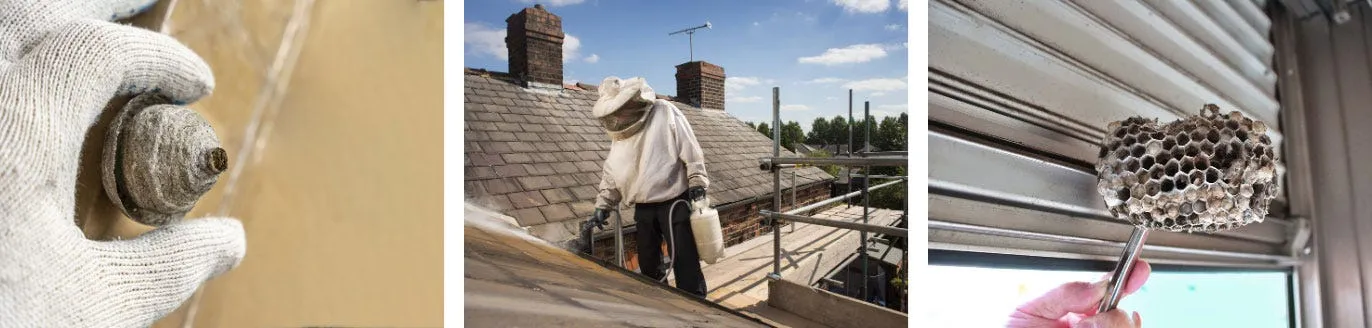
Choose the Right Time
Wasps are less active during the evening or early morning when temperatures are cooler. If removal is necessary, these times are generally considered safer, as most of the colony will be inside the nest.
When You Can Remove a Wasp Nest Yourself
DIY removal may be appropriate if:
- The nest is small (smaller than a baseball).
- It is clearly visible and easy to access.
- Activity levels appear low to moderate.
- You have the proper protective gear and tools.
How to remove it safely:
- Keep your distance and plan an exit path before approaching.
- Use a store-bought wasp and hornet spray with a long-range nozzle and follow the manufacturer's instructions.
- Apply the spray at dusk or dawn, aiming directly at the nest.
- Step away immediately after application.
- Wait at least 24 hours before checking for activity.
- Once it is inactive, carefully remove the nest with a tool and dispose of it in a sealed bag.
When to Call a Professional
Certain situations are not safe for DIY removal, including:
- The nest is large (larger than a baseball or football-sized).
- It's inside walls, attics, roofs, or underground.
- You notice aggressive swarming behaviour.
- The nest is high up or difficult to access (e.g., rooflines or trees).
- Anyone nearby has a known allergy to wasp stings.
In these cases, pest control professionals have specialized equipment and protective gear to handle removal safely.
Prevent Future Nests
Once the nest has been safely addressed, you can take steps to reduce the chances of wasps returning:
- Seal cracks and openings around your home using caulking.
- Keep garbage bins tightly closed.
- Remove food sources from outdoor areas.
- Regularly inspect eaves, sheds, and trees for early signs of nest building.
Dealing with wasps can be stressful, but with the right approach and precautions, you can help keep your outdoor spaces safe and enjoyable all season long. Visit us in-store or shop online at kent.ca to find the right solution for you.